
Ayurveda vs Allopathy vs Homeopathy: how to choose the right kind of care
India has many systems of medicine, and many families use more than one. A clear, non-partisan guide to what each is, when to start where, and how to stay safe.
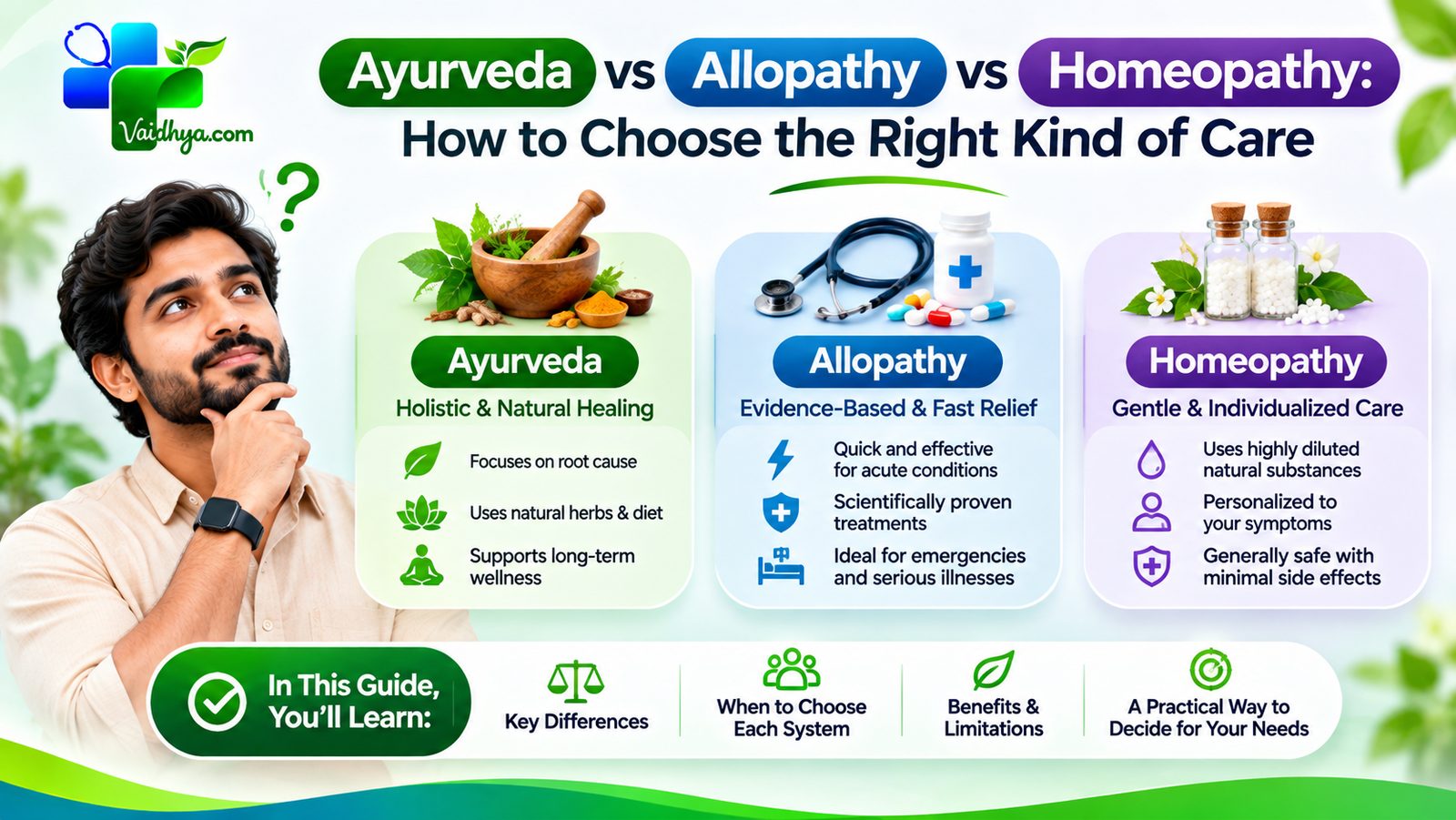
There is no single right system of medicine for everyone. Allopathy, Ayurveda, Homeopathy, Unani, Siddha, Naturopathy and Yoga are all part of how Indian families look after their health. The better question is: which one is most appropriate for this problem, today, and how do I use more than one safely?
This guide explains each system in plain language, offers a simple way to decide where to start, and covers the safety habits that matter whichever doctor you see. It is general information to help you make informed choices, not medical advice. If you are seriously unwell, or unsure whether a symptom is urgent, see a doctor or go to a hospital without delay.
On Vaidhya, the first choice you make when finding a doctor is the system of medicine, which is why we wrote this guide. Every doctor is listed under their own system and speciality, so you can see exactly what kind of care you are booking.
The systems at a glance
| System | In one line | Typical practitioner |
|---|---|---|
| Allopathy | Modern, conventional, evidence-based medicine, including surgery, diagnostics and emergency care | MBBS and specialist doctors |
| Ayurveda | A traditional Indian system focused on balance, diet, lifestyle, herbal medicines and therapies such as Panchakarma | BAMS and Ayurvedic specialists |
| Homeopathy | A system that uses highly diluted preparations, with detailed attention to the individual's symptoms | BHMS practitioners |
| Unani | A traditional system with roots in Greco-Arabic medicine, using regimens, diet and medicines | BUMS practitioners |
| Siddha | A traditional system from South India, with its own diagnosis, medicines and therapies such as Varmam | BSMS practitioners |
| Naturopathy and Yoga | Lifestyle-based approaches using diet, water therapy, exercise, breathing and relaxation | BNYS practitioners and certified yoga therapists |
In India, the traditional systems are grouped together as AYUSH: Ayurveda, Yoga and Naturopathy, Unani, Siddha and Homeopathy, with a dedicated Ministry of AYUSH. Practitioners are registered with their own councils, separate from the medical council that registers allopathic doctors.
Allopathy: when it is usually the right place to start
Allopathy is the system most people mean when they say "a doctor". It is strongest where diagnosis, measurement and urgent treatment matter.
- Emergencies and injuries: chest pain, breathing difficulty, severe bleeding, fractures, stroke symptoms, high fever in infants, poisoning.
- Infections that need testing or antibiotics, such as suspected typhoid, tuberculosis or malaria.
- Conditions that need scans, blood tests or surgery, from appendicitis to cataracts.
- Cancer care, dialysis, transplants and intensive care, which depend on advanced hospital facilities.
- Vaccination, pregnancy care and child development checks, which follow national guidelines.
- Managing chronic conditions such as diabetes and high blood pressure with medicines that are measured against blood tests.
Allopathy also has many specialities, from cardiology to dermatology, and you can usually find one for your exact problem. Its limits are worth knowing too: appointments can be short, and lifestyle and long-term wellbeing sometimes get less time than they deserve.
Ayurveda and the other traditional systems: where people use them
People turn to traditional systems for a range of reasons. Common ones include long-term wellbeing, digestive and lifestyle problems, joint and back pain, skin conditions, stress and sleep, recovery after illness, and preventive care.
Ayurveda
Ayurveda looks at the person as a whole: diet, sleep, daily routine, digestion and constitution. Treatment may combine herbal medicines, dietary advice, yoga and therapies such as massage and Panchakarma. A consultation is often longer and more conversational than in Allopathy. Ayurvedic doctors list specialisations such as Kayachikitsa (general medicine), Shalya Tantra (surgery), Shalakya Tantra (eye, ENT and dental), Prasuti Tantra and Stri Roga (women's health) and Kaumarabhritya (children's health).
Homeopathy
Homeopathic practitioners take a detailed history of symptoms and personality and prescribe individualised remedies. People often consult homeopaths for allergies, skin problems, recurrent colds and chronic complaints. Scientific evidence for homeopathy is debated, so it is wise to ask your practitioner what to expect and not to delay conventional care for serious conditions.
Unani and Siddha
These traditional systems, centred in particular regions and communities, offer regimens, dietary guidance and medicines, along with therapies. They are used for chronic and lifestyle conditions, and many people choose them on the recommendation of family.
Naturopathy and Yoga
These emphasise nutrition, hydrotherapy, exercise, breathing and mental wellbeing. Yoga therapy is widely used for back pain, stress, breathing and rehabilitation, alongside other treatment.
A simple way to decide where to start
You can use these questions as a guide.
- Is this an emergency, or could it be serious? Chest pain, difficulty breathing, sudden weakness, heavy bleeding, a high fever in a baby, an injury, or a sudden severe pain: go to a hospital or an emergency department. See our emergency readiness guide.
- Do I need a test, scan or procedure to find out what is wrong? Start with an allopathic doctor or a hospital.
- Is it a long-standing, mild or lifestyle-related problem that has not improved, or something you want to prevent? You may prefer to begin with Ayurveda, Naturopathy, Yoga or another traditional system, or to see both an allopathic and a traditional doctor.
- What does your own history say? If a particular approach has worked for you or your family before, that is useful information, as long as it is safe for the current problem.
- Is it a child, an older adult or a pregnant woman? Take extra care, and involve a doctor who is registered in the system you choose and experienced with that group.
If you are unsure, begin with a general physician. They can tell you whether a condition is serious and refer you appropriately.
Using more than one system safely
Many people use more than one system, and that is fine. The risks come from doing it silently. Follow these habits.
- Tell every doctor about everything you take. Include medicines, herbal preparations, supplements, home remedies and special diets. Some herbs affect how prescription medicines work, and some medicines should not be combined.
- Never stop a prescribed medicine on your own, especially for conditions such as diabetes, high blood pressure, epilepsy, thyroid disease or heart disease, because a sudden stop can be dangerous. Discuss any change with the doctor who prescribed it.
- Keep your records together. Prescriptions, reports and notes from every doctor should be in one place. Taking them to each visit helps each doctor see the whole picture.
- Be wary of promises. No practitioner in any system can guarantee a cure. Treat claims of "100% cure" or pressure to stop other treatment as warning signs.
- Ask about evidence and expectations. A good doctor will tell you what to expect, how long it may take, and what warning signs mean you should seek urgent help.
A family doctor who knows your history can act as a coordinator, particularly for older relatives who see several practitioners.
How to check that a doctor is genuine
Whatever system you choose, a few checks protect you.
- Qualification matches the system. An Ayurvedic doctor typically holds a BAMS, a homeopath a BHMS, an allopathic doctor an MBBS, and so on. Be cautious if someone practises a system they are not qualified in.
- Registration. Doctors should be registered with the relevant state or national council. A registration number should be available on request.
- Verification on the platform. On Vaidhya, doctors upload their registration documents and the team reviews them before the profile goes live, and a verified badge appears once approved. Look for it.
- Clear fees and timings. A doctor who states their fee and availability upfront is easier to trust.
- Honest reviews. A few real reviews, including mixed ones, tell you more than a flawless record.
- How they talk to you. A good practitioner listens, explains and does not pressure you.
Questions to ask at the first visit
Prepare a few questions. They help in any system.
- What do you think is causing my problem?
- What tests, if any, do I need?
- What are my options, and what are the risks and benefits of each?
- How long before I should notice a difference?
- Are there lifestyle or diet changes that would help?
- Is it safe to combine this with the other treatments I am using?
- What signs mean I should come back sooner or go to a hospital?
- When should I follow up?
Write the answers down, or ask for them in writing. It is easy to forget in the moment.
Myths worth dropping
A few ideas cause avoidable harm, and they cut across every system.
- "Natural means safe." Herbs and traditional preparations are real medicines. They can interact with other medicines, cause side effects and, if poorly made or contaminated, cause harm. Buy from reputable sources and take them under guidance.
- "Modern medicine only treats symptoms." Good allopathic care also addresses causes, prevention and lifestyle. The quality of the conversation depends on the doctor and the time available, not on the system.
- "Traditional medicine has no side effects." Any treatment that does something can also do something unwanted. Ask about both.
- "If it worked for my neighbour, it will work for me." People differ, and so do their problems. Use others' experience as a starting point for questions, not as a prescription.
- "I must choose only one." You can use more than one, with transparency, as long as each doctor knows about the others.
- "Stopping medicines when I feel better is fine." For many conditions, feeling better means the treatment is working, and stopping suddenly can bring the problem back or make it worse. Ask first.
If you remember only one habit from this article, make it honesty with your doctors. It makes every system safer.
Where families often start, by common situation
The table shows typical starting points. It is a guide to conversation, not a rulebook, and your own situation may differ.
| Situation | A common starting point | Also worth considering |
|---|---|---|
| Sudden severe pain, injury, breathing trouble | Emergency department or hospital | Nothing before urgent care |
| Fever that does not settle, suspected infection | General physician (Allopathy) | Supportive care from a traditional doctor once serious causes are excluded |
| Long-standing digestive discomfort | General physician or gastroenterologist to rule out serious causes | Ayurveda or Naturopathy for diet and lifestyle |
| Joint and back pain | Orthopaedic doctor or physiotherapist | Ayurveda, Yoga therapy or Naturopathy as supportive care |
| Skin problems and allergies | Dermatologist (Allopathy) | Homeopathy or Ayurveda, with your dermatologist's knowledge |
| Stress, sleep and general wellbeing | General physician, to check for a medical cause | Yoga, Ayurveda, Naturopathy, nutrition guidance and counselling |
| Pregnancy and childbirth | Gynaecologist and obstetrician | Traditional women's health practitioners for wellbeing, with your obstetrician's knowledge |
| Weight and nutrition | Dietitian or nutritionist, and a physician if there is a medical condition | Naturopathy, Ayurveda or Yoga for lifestyle support |
Notice that most rows have a first step that rules out something serious. That is the core idea of this guide: when in doubt, make sure you have not missed something urgent, then choose the approach that suits you for the rest.
Cost, access and convenience
Practical matters count too. Fees differ between systems and specialities, between cities, and between clinics and hospitals. Some traditional treatments, such as multi-day Panchakarma programmes, involve a stay and a different cost structure than a single consultation.
Ask about the total cost before you begin, including consultation, medicines, therapies and follow-up visits. Check whether the doctor offers video or audio follow-ups to save travel, and whether home visits are available if someone in the family cannot travel. Vaidhya lets doctors set separate fees for audio, video, in-person and home visits, and shows them upfront. If a relative needs nursing or physiotherapy at home after an illness, our guide to choosing home nursing care explains what to look for.
Why a platform that lists every system helps
Families often do not have a single place to compare options. They ask relatives, search online, and end up with a mix of advice. A platform that organises doctors by system of medicine first, and speciality second, saves time and confusion. You can browse Allopathy, Ayurveda, Homeopathy, Naturopathy, Unani, Siddha, Yoga, Nutrition and Wellness and Veterinary care separately, compare verified doctors in the category you chose, and book a consultation.
Hospitals and clinics are organised the same way, by category, then by type (for example Government, Private or NGO) and sub type. If you are comparing apps, our page on Vaidhya and Practo and the guide to choosing a doctor-booking platform set out what to look for. Whatever you use, remember the main point: choose care that fits the problem, be honest with every doctor, and keep your records together.
Frequently asked questions
Which system of medicine is best?
There is no single best system. Allopathy is strongest for emergencies, diagnosis and surgery. Traditional systems are widely used for long-term wellbeing and lifestyle conditions. The right choice depends on the problem, and many people use more than one with their doctors' knowledge.
Can I take Ayurvedic and allopathic medicines together?
Sometimes, but not always safely. Some herbs and medicines interact. Tell every doctor everything you take, and do not stop a prescribed medicine without advice.
Is homeopathy proven?
Scientific evidence for homeopathy is debated. It is used by many people, but for serious conditions you should not delay conventional care. Ask your practitioner what to expect.
How do I find a good Ayurvedic doctor on Vaidhya?
Choose the Ayurvedic category, then a speciality such as Kayachikitsa or Panchakarma. Look for the verified badge, check fees and timings, and read reviews. See Vaidhya for patients.
Is Vaidhya free for patients?
Yes. You pay only for the services you book, such as a consultation fee.
Find the right doctor
Browse every system of medicine and book a verified doctor in minutes.
Download the appKeep reading

Emergency readiness for families: ambulance, oxygen and blood bank basics
In an emergency there is no time to search. A little preparation, the right numbers, a simple plan and a ready bag, can save precious minutes. A practical guide for Indian families.

Practo alternatives: how to choose a doctor-booking platform in India
Patients, doctors and hospitals can choose from several healthcare apps. Here is an honest framework to compare them, what each type is good at, and where Vaidhya fits.

Home nursing care in India: how to choose a provider and what affects the price
Home nursing, physiotherapy and attendant care can make recovery easier for the whole family. Here is how to choose a safe provider, what to ask, and why prices differ.
Ready to join Vaidhya?
Download the app and be part of the platform bringing Indian healthcare together.