
Healthcare jobs in India: how to build a strong profile and get hired
Nurses, technicians, pharmacists and hospital staff: how to present your skills, find the right openings, apply well and prepare for interviews in healthcare.
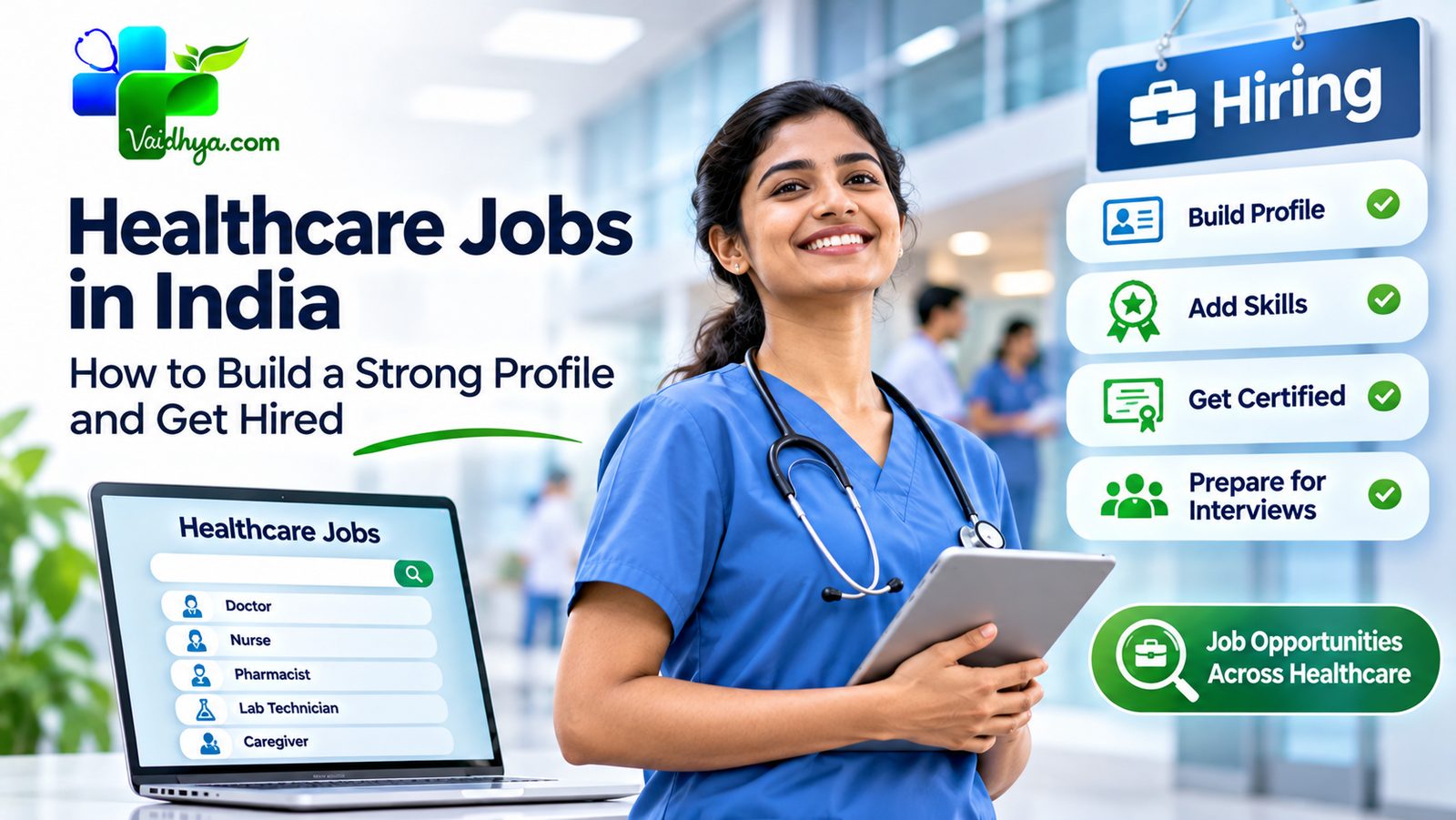
To get hired in healthcare in India, show what you can do, prove that you are qualified and registered, and make it easy for employers to find and contact you. Hospitals and clinics hire for skills, reliability and fit. A complete profile with verified qualifications, a clear resume and a prompt, polite response to opportunities does more for your chances than any trick.
This guide is for people looking for work in healthcare: nurses, laboratory and radiology technicians, pharmacists, physiotherapists, front-desk and administration staff, patient-care attendants and others. It covers how to build a profile, how to write a resume that employers read, where to look, how to apply, how to prepare for interviews and how to keep growing once you are hired. It also explains how the healthcare job portal on Vaidhya works, for job seekers and for the hospitals and clinics hiring through it.
What healthcare employers look for
Healthcare is different from many fields, because the work affects people's health and safety. Employers therefore weigh a few things heavily.
- Qualifications and registration. A valid degree or diploma, and where required, registration with the relevant council. Nurses, pharmacists, physiotherapists and others practise under registration.
- Relevant experience. Experience in a similar setting, such as an ICU, an OPD or a diagnostic lab, counts more than years alone.
- Reliability. Healthcare runs on shifts and cannot stop. Employers value people who arrive on time, follow procedures and tell them early if something goes wrong.
- Communication and compassion. Patients and families are anxious. Staff who explain calmly and treat people with respect make a difference.
- Willingness to learn. Equipment, protocols and software change. Employers like people who keep up.
- Fit with the team. Healthcare work is collaborative. A good attitude helps as much as a good certificate.
Your profile and resume should show all of these, not only the first two.
Build a complete profile
A profile is more than a resume. It is a structured summary that employers can scan and filter. On Vaidhya, a job seeker profile includes your photo, date of birth, gender, city, job category, qualifications, skills, work experience, resume, a short description, expected salary and employment type. The app shows a completeness score and lists exactly what is missing, so you know what to add.
The elements that matter most
- A clear photo. Plain background, good light, professional clothing. It helps employers remember you.
- Your job category and city. Employers search by these first. Choose the category that best describes the work you want.
- Qualifications with details. Course, institution, year, and registration number where relevant.
- Skills. Be specific: "IV cannulation, sterile technique, patient monitoring" is better than "nursing skills".
- Work experience. Employer, role, dates and a line or two on what you did and achieved.
- Expected salary and employment type. Realistic expectations save time on both sides.
- A short summary. Two or three sentences about who you are and what you are looking for.
- Your resume. A clean PDF that matches your profile.
Aim for a completeness score near 100 percent. Profiles that are complete appear more convincing and are easier to match to openings.
Write a resume that employers actually read
Hiring managers in hospitals and clinics may read dozens of resumes quickly. Make yours easy.
Keep it short and clear
One page for early-career staff, two at most for experienced professionals. Use a plain layout, a readable font and clear headings: Summary, Experience, Education, Registration and Skills.
Lead with what matters
Put your registration, qualification and most relevant experience near the top. If you are a registered nurse with five years in intensive care, say so in the first lines.
Describe results, not just duties
Instead of "responsible for patient care", write "provided bedside care for 8 ICU patients per shift, including ventilator monitoring and medication administration". Numbers help where they are honest: patients per shift, tests per day, bed occupancy.
Be accurate
Never exaggerate qualifications, registration or experience. In healthcare, employers verify them, and a false claim ends the process and may have serious consequences.
Proofread
Spelling mistakes suggest carelessness, which is a poor signal in a field built on accuracy. Ask someone to read it.
Keep documents ready
Have scanned copies of certificates, registration, ID and previous employment letters ready. Employers will ask for them.
Where and how to look for openings
Use several routes, because healthcare jobs are found in many ways.
- Healthcare job portals. Portals focused on healthcare show relevant openings from hospitals and clinics. Vaidhya's job portal lets you apply, track each application and receive alerts for openings that match your category and city.
- General job portals. They cover every industry and can be useful for administrative and corporate roles. See our comparison of Vaidhya and Naukri for how they differ.
- Hospital and clinic websites and notice boards. Many post vacancies directly.
- Professional networks and associations. Alumni groups, nursing and pharmacy associations and colleagues often hear of openings first.
- Walk-in drives and recruitment events. Common in healthcare, especially for nurses and technicians.
- Referrals. A recommendation from someone who works there is powerful. Do not be shy about asking.
Set up alerts so that new openings come to you, and check them regularly. Employers fill many roles quickly, and being among the first to apply helps.
Apply well
A good application is short, relevant and polite.
- Read the opening carefully. Note the role, location, shift, experience and qualification required. Apply only where you genuinely fit, or where you can explain why you would.
- Match your message to the job. A line or two on why you are suitable, mentioning relevant skills and experience from your profile.
- Attach the right documents. A current resume and, if asked, certificates.
- Respond quickly. When an employer messages or calls, reply the same day if you can.
- Keep track. Note where you applied, when and the outcome. The app's application tracker does this for you.
- Follow up once. A brief, polite message after a week or so is acceptable.
Avoid mass applications to every opening. Targeted applications get better responses and reflect better on you.
Prepare for the interview
Healthcare interviews combine questions about skills, situations and attitude, and sometimes a practical test.
Know the basics about the employer
Learn what kind of hospital or clinic it is, its specialities and its size. Be ready to say why you want to work there.
Prepare for common questions
- Tell us about yourself and your experience.
- Why do you want this role?
- Describe a difficult situation with a patient or colleague and how you handled it.
- How do you manage a busy shift or several urgent tasks at once?
- What would you do if you noticed a colleague making a mistake that could affect a patient?
- How do you keep your skills up to date?
- Are you comfortable with night shifts and rotations?
Be ready for practical questions
Nurses may be asked about procedures, infection control or emergency response. Technicians may be asked about equipment and quality control. Pharmacists may be asked about dispensing and interactions. Revise the fundamentals of your area.
Present yourself well
Dress neatly, arrive early, bring your documents, and be polite to everyone you meet. Listen carefully, answer honestly, and ask a thoughtful question at the end, such as about training or the team.
Talk about shifts, pay and growth honestly
Ask about the shift pattern, salary structure, leave, and opportunities to learn. A clear understanding avoids disappointment later.
Examples: how to describe your experience
Specific, honest descriptions work better than general ones. These examples show the style. Replace the details with your own.
- Staff nurse: "Registered nurse with four years in a 120-bed multi-speciality hospital, the last two in the surgical ICU. Experienced in ventilator and central line care, medication administration, wound management and family communication."
- Laboratory technician: "DMLT-qualified technician with three years in a busy diagnostic lab. Processed about 80 samples per day across haematology and biochemistry, ran daily quality control and maintained equipment logs."
- Pharmacist: "Registered pharmacist with two years in a hospital pharmacy. Dispensed against prescriptions, checked for interactions, managed stock and expiry, and counselled patients on how to take medicines."
- Physiotherapist: "BPT graduate with three years in orthopaedic and neurological rehabilitation. Designed exercise programmes, performed manual therapy and tracked patient progress."
- Front-desk executive: "Two years managing registration and appointments at a busy OPD. Handled around 150 patient check-ins per day, resolved billing queries and coordinated with doctors and nurses."
Notice what they share: the role, the setting, a number or two, and a few concrete skills. Employers can picture you doing the job.
Growing your career once you are in
Getting the job is the start. Healthcare careers reward steady growth.
- Keep learning. Short courses, workshops and certifications in your area, such as advanced life support, wound care, infection control or a specific modality, make you more valuable and open new roles.
- Keep your registration current. Renew on time and keep records of any continuing education that is required.
- Specialise thoughtfully. ICU, operation theatre, dialysis, paediatrics and oncology are examples where experience is highly valued. Choose based on your interest and on demand.
- Build relationships. Colleagues, supervisors and doctors can mentor you and recommend you later.
- Take on responsibility when offered: training new staff, leading a small project, helping with audits.
- Look after yourself. Shift work is demanding. Rest, nutrition and support protect your health and your performance.
Keep your profile updated as you grow. Add new skills and experience, and refresh your resume. Opportunities often arrive when you are not actively looking, and a current profile lets you take them.
For hospitals and clinics: hiring well through a job portal
If you are an employer, a healthcare-specific portal can save time. You reach candidates who are already in healthcare, with qualifications, skills and experience in a standard format, and you can compare them quickly.
- Write a clear opening. Role, department, shift, qualification, experience, location and salary range.
- Check registration and references. Always verify before an offer.
- Respond to applicants. Even a short rejection is better than silence, and your reputation as an employer matters.
- Be clear about conditions. Shifts, notice period, probation and benefits.
- Use your own account well. Hospitals and clinics on Vaidhya can browse job seeker profiles and reach out, as well as receive applications.
For a view of how clinics run day to day, see how to reduce no-shows and waiting time, and for hospitals, Vaidhya for hospitals.
Staying safe while job hunting
Unfortunately, job seekers are sometimes targeted by scams. Protect yourself.
- Be wary of any employer or agent who asks for money to give you a job, a "registration fee" or a "training deposit".
- Verify that the company is real: check its website, address and reviews, and look for the job on its official channels.
- Do not share sensitive documents, such as bank details or ID numbers, until you have confirmed the employer and are in a genuine hiring process.
- Be cautious with offers that seem too good, especially for work abroad. Verify through official channels.
- Meet in professional settings, and tell someone where you are going.
If something feels wrong, stop and ask someone you trust. A genuine employer will not mind you checking.
Frequently asked questions
Who can use the job portal on Vaidhya?
Nurses, technicians, pharmacists, physiotherapists, front-desk and administration staff, patient-care attendants and other healthcare workers. Hospitals and clinics on the platform hire through it.
Does it cost anything for job seekers?
Job seekers join with a small annual subscription. The live price is shown on the job seekers page.
What is the completeness score?
It shows how much of your profile is filled in and lists what is missing, so you can add details that make you easier to match to openings.
Can employers find me?
Yes, if you choose to make your profile visible. Hospitals and clinics can browse profiles and contact candidates.
Should I put my expected salary on my profile?
A realistic range helps both sides save time. You can adjust it as you learn what the market offers for your role and city.
Build your healthcare profile
Apply to hospitals and clinics, track your applications and get alerts for roles that match.
Join as a job seekerKeep reading
Practo alternatives: how to choose a doctor-booking platform in India
Patients, doctors and hospitals can choose from several healthcare apps. Here is an honest framework to compare them, what each type is good at, and where Vaidhya fits.
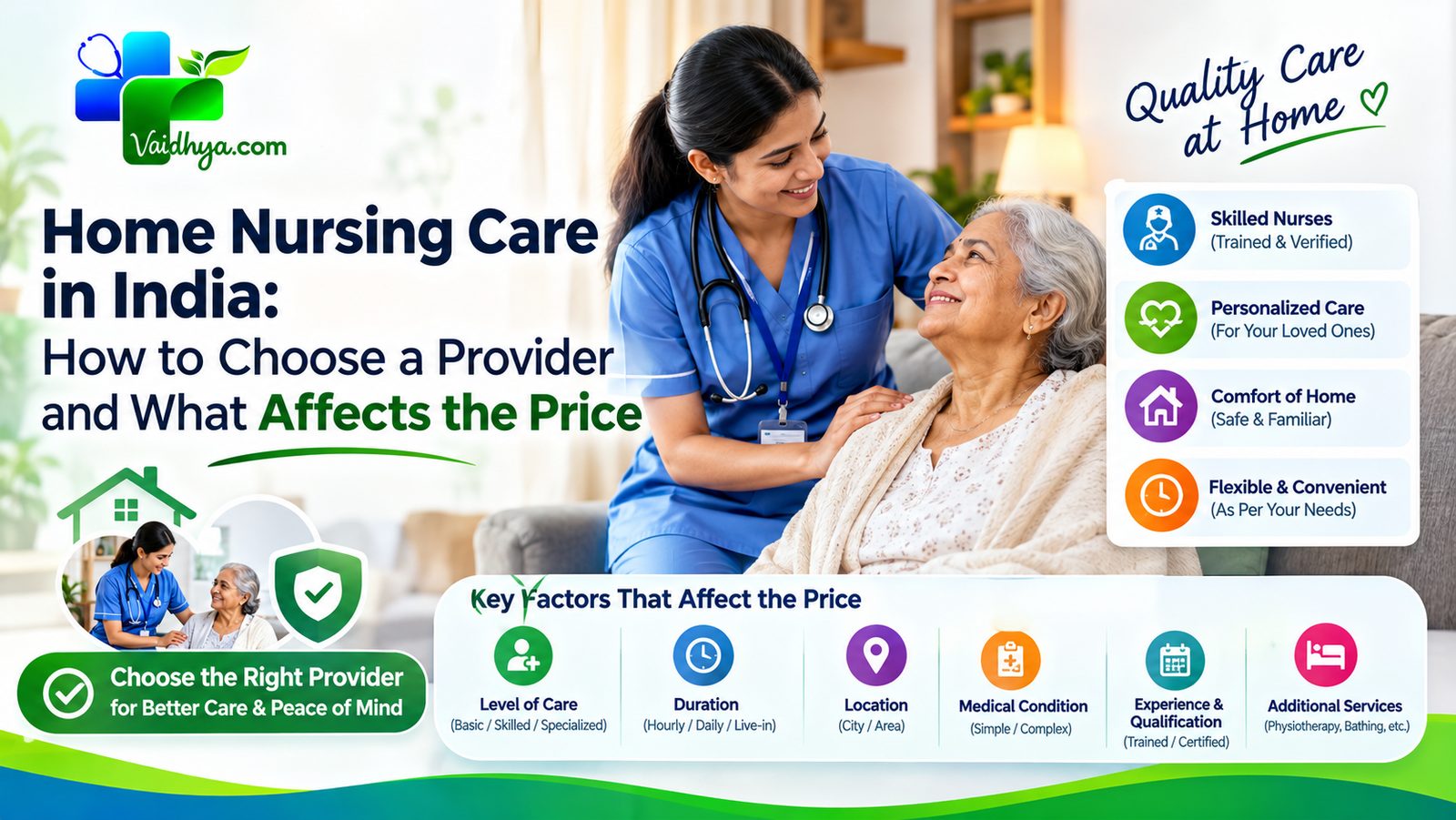
Home nursing care in India: how to choose a provider and what affects the price
Home nursing, physiotherapy and attendant care can make recovery easier for the whole family. Here is how to choose a safe provider, what to ask, and why prices differ.
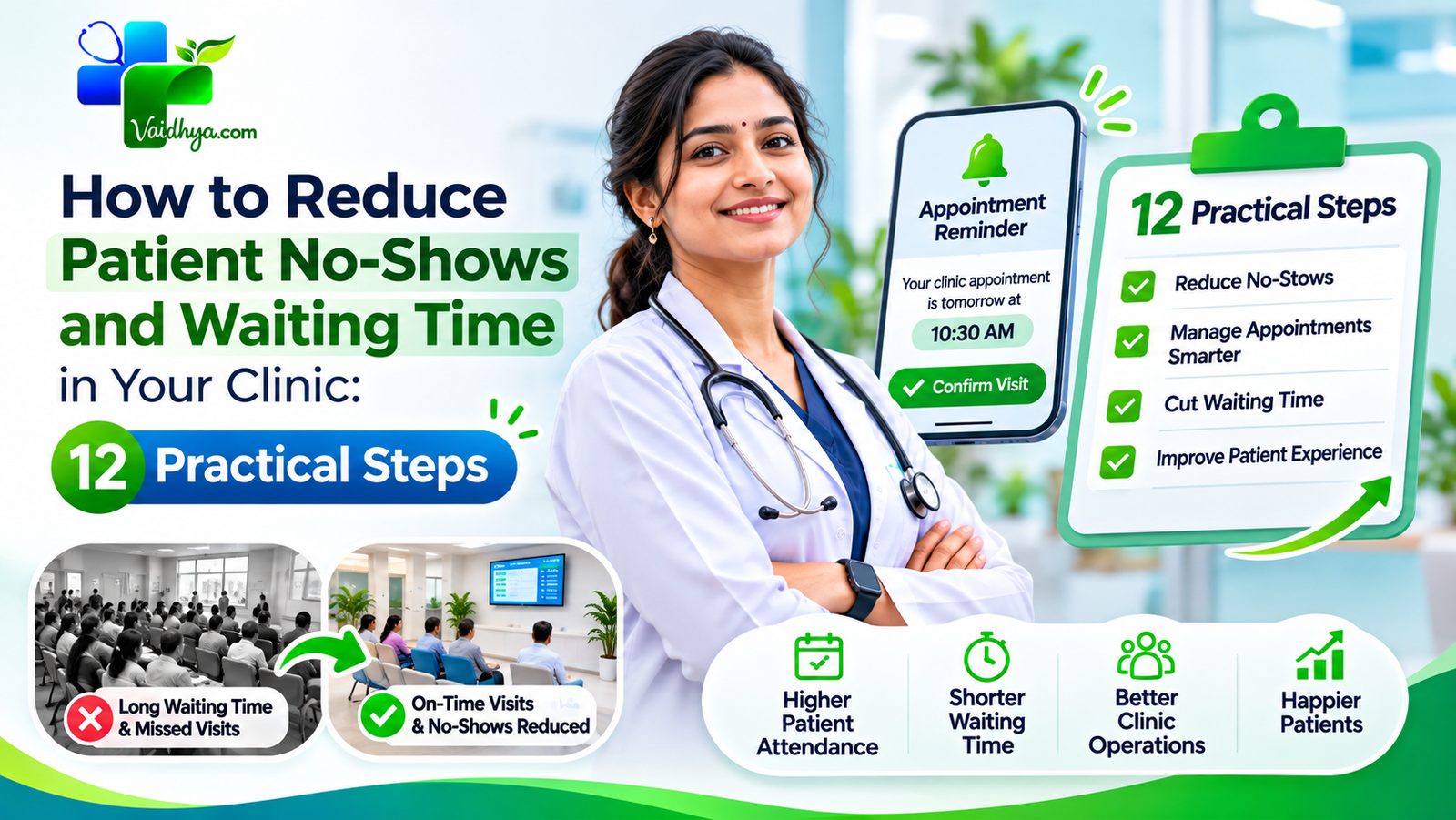
How to reduce patient no-shows and waiting time in your clinic: 12 practical steps
Empty slots and crowded waiting rooms cost clinics money and goodwill. These twelve practical steps cut no-shows and waiting without adding staff.
Ready to join Vaidhya?
Download the app and be part of the platform bringing Indian healthcare together.